You have no items in your shopping cart.
Teaching Your Dog To Sit
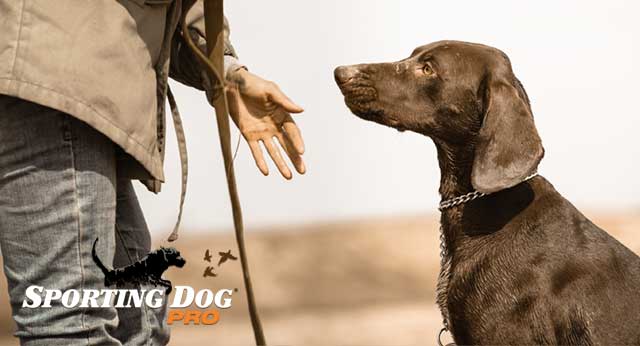
Sit is simultaneously the most basic command in dog training and the one with the most practical applications. It’s the foundation for stay. It’s the default position for everything from greeting visitors to holding steady at the line. It’s the command that creates a pause between impulse and action — which is exactly what self-control is. Teaching sit correctly, completely, and under distraction produces a dog with a useful tool that carries into every other area of training.
What you need
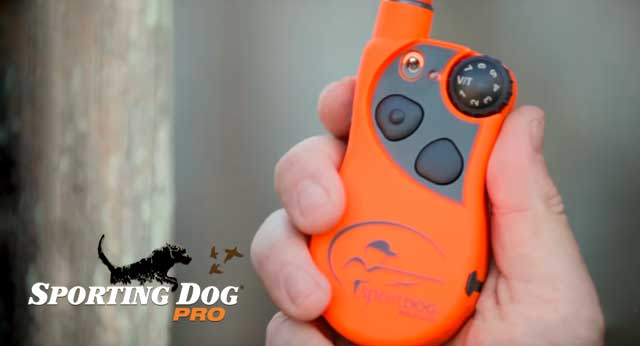
A flat collar, a four-to-six-foot leash, and the e-collar if you’re already using one are the tools for this work. Put the e-collar on from the start even if you don’t intend to use it yet — introducing it mid-session when the dog needs a reminder creates an association between the collar and correction rather than between the collar and normal training. You want the collar to be background equipment that’s always on, not a signal that a correction is coming.
Start in a quiet, distraction-free area. The backyard is fine. A training session with three barking dogs next door and children running through the yard is not the right environment to introduce a new command. Build the behavior where the dog can actually focus, then proof it under distraction once it’s solid.
Teaching the sit — the physical method
The most reliable way to teach sit initially is through physical guidance rather than luring, because it gives the dog clear physical information about exactly what position you want and doesn’t depend on the dog already understanding what a treat held above the nose is supposed to communicate.
Get down to the dog’s level. Give the sit command once — clearly, calmly, once — and immediately guide the dog into position: gently lift her front end upward by the collar while pressing down on her hindquarters with your other hand. The moment her bottom makes contact with the ground, release all physical pressure and praise immediately. That immediate release and praise is the reward — she went where you put her, you told her that was exactly right, and the pressure stopped.
Keep her in the sit position for a few seconds before releasing her with a specific release word — “okay” or “free” are the most common. The release word matters because it establishes that she stays in the position until you tell her otherwise, not until she decides she’s done. A sit without a reliable hold is a half-trained behavior.
Repeat this sequence multiple times in a session — command, guide, praise, hold briefly, release. Most dogs begin anticipating and moving into the position on their own after a few sessions. When that happens, the behavior is being learned. Continue reinforcing it with genuine praise every time she gets it right.
Give the command once. Not twice, not three times with increasing volume. A dog trained to respond to a single clear command is a dog with a real behavior. A dog trained to respond after the third repetition has been taught that the first two are optional. If she doesn’t respond to the first command, physically guide her into position — that’s the follow-through that teaches the command has a consistent consequence.
Adding the sit from heel position
Once the dog responds reliably to the sit command from a stationary position, the next step is teaching it from motion — asking for a sit while heeling, which requires the dog to stop, fold into position, and hold until released. This is a more demanding version of the same behavior and typically takes additional training sessions before it’s as reliable as the stationary sit.
Walking alongside you on the leash, give the sit command as you stop your own forward motion. Stop cleanly and simultaneously with the command rather than continuing to walk while giving it. The clear physical cue of you stopping reinforces the verbal command. If she stops and looks to you for confirmation but doesn’t sit, give her a moment and then use gentle physical guidance again. Once she’s making the connection reliably, this is where a low-level e-collar correction can be used as a precise, timely reminder when she knows the command but isn’t complying — not as punishment, but as the same kind of pressure you’d use with your hand, delivered at the moment the command is given.
Proofing under distraction
A sit that only works in the backyard isn’t a sit — it’s a backyard behavior. Proofing means practicing the command in progressively more distracting environments until the response is as reliable in the field as it is at home. Increase difficulty gradually: a busier area of the yard, a park, around other dogs, eventually in hunting environments where real stimulation is present.
Every environment where the dog successfully holds a sit under distraction is a rep that builds the generalization you need. Every environment where she breaks from a sit and nothing happens teaches her that the sit is negotiable in certain situations. Be consistent about follow-through regardless of where the training session is happening.
A note for pointing dog owners
Before getting into the mechanics, one consideration worth raising: for pointing dog handlers, the order and association of commands matters more than it does for retrievers or general obedience work. You do not want a pointer to associate stopping in response to a command with sitting down. The whoa command — the stop-in-place command that produces the point position — needs to be clearly distinct from sit, and if a young pointing dog learns to sit every time he’s asked to stop, you can create confusion that takes real work to untangle later.
This doesn’t mean you shouldn’t teach sit to a pointing dog — it means you should be deliberate about how you distinguish the two commands in training, use different cues and different body language for each, and be consistent. Retriever owners and upland hunters with flushing or general gun dogs can teach sit as the first obedience command without this concern.
The sit in the field
For retrievers and waterfowl dogs, a reliable sit is the foundation of everything else: the steady sit at the line before the send, the sit on the whistle during a blind retrieve, the quiet hold in the blind while birds are working. The dog that has been trained to an exacting sit standard in everyday life holds that standard in the field. The dog who sits when he feels like it in the yard will sit in the blind when he feels like it — which won’t be when birds are working overhead.
Consistent, reliable obedience starts with the most basic command taught correctly. The sit is where that process begins.